
If your garage door suddenly stopped working or made a loud bang in the middle of the night, there is a good chance a spring broke. Garage door springs are one of the most hardworking parts of the entire system. They lift and lower hundreds of pounds of door weight every single day. When they fail, the whole door can become unsafe and unusable.
Homeowners in Rockford, IL deal with this problem more often than you might think. The freeze-thaw cycles in northern Illinois put extra stress on metal components, which means springs here tend to wear out faster than in warmer climates. Knowing the warning signs early can save money, prevent injuries, and keep the garage door running safely all year long. And when the time comes, getting broken garage door spring repair done promptly by a professional makes all the difference.
Here are the most common signs of a broken garage door spring, plus what to avoid doing when one fails.
The Garage Door Won’t Open At All
This is the most obvious sign. One moment the door works fine, and the next it refuses to budge. When the opener motor hums but the door does not move, a broken spring is usually the reason.
Torsion springs and extension springs do the heavy lifting. The opener motor only guides the door along the tracks. Without working springs, the motor simply cannot lift the door on its own.
What to check: Look above the door at the horizontal metal bar (torsion bar) near the ceiling. If the spring coiled around it has a visible gap or separation, it is broken.
Tip: Do not keep pressing the wall button or remote hoping it will open. Forcing the opener to work without spring support can burn out the motor and cause additional damage.
Not sure if the situation needs urgent attention? Read “Is a Broken Garage Door Spring an Emergency?” to find out when it cannot wait.
A Loud Bang From the Garage
Many homeowners describe the sound of a breaking spring as a gunshot or a loud bang coming from the garage. This happens most often at night when temperatures drop, which is especially common during Rockford winters.
The loud sound is caused by the spring releasing all of its stored tension at once when it snaps. It is startling, but it is actually a normal part of spring failure.
What to check: After hearing the noise, do not open the garage door. Instead, visually inspect the springs without touching them.
Tip: If the bang happens during extreme cold, it is a sign that the springs were already fatigued. Consider having springs inspected every fall before the Rockford cold season hits.
Curious about why this happens in the first place? “What Causes a Broken Garage Door Spring?” breaks down the most common culprits worth knowing about.
The Garage Door Opens a Few Inches Then Stops
Most modern garage door openers have a built-in safety feature that detects resistance. If the door starts to lift and the springs cannot support the weight, the opener senses the tension and automatically stops.
This usually results in the door rising only 6 inches or less before halting. The opener may also reverse direction entirely.
What to check: Watch the top corners of the door as it begins to open. If one side lifts higher than the other, a spring on one side may be broken while the other still works partially.
Tip: This uneven lifting is a serious safety concern. A lopsided door can fall off its tracks. Stop using the door completely until the spring is professionally replaced.
Still not 100% certain what is going on with the door? “How Do You Know If Your Garage Door Spring Is Broken?” walks through a clear, step-by-step way to confirm it.
The Garage Door Looks Crooked or Tilted
A garage door that hangs unevenly is a major red flag. Extension springs are located on both sides of the door, and when only one breaks, the door loses balance. This creates a crooked, tilted appearance.
In Rockford homes with older garage doors, this can also be a sign of cable problems that developed after a spring snapped. Broken springs often damage the cables and drums connected to them.
What to check: Stand inside the garage and look at the door from a distance. If one side sits higher than the other when closed, the spring tension is uneven.
Tip: Never attempt to manually force a crooked door open. The door can come crashing down without warning.
The Cables Are Loose or Hanging Off
Garage door springs and cables work together as a system. When a spring breaks, the cables that run through the spring mechanism lose their tension and go slack. You may notice cables hanging loosely at the sides of the door or piled on the ground.
This is one of the most visible signs of a broken spring, even if the spring itself looks intact from a distance.
What to check: Look at the bottom corners of the door for any cables that appear loose, tangled, or disconnected from the drum (the round spool near the top of the track).
Tip: Loose cables can snap under sudden tension if someone tries to manually lift the door. Treat hanging cables as a serious hazard.
The Spring Has a Visible Gap
A functional torsion spring is one continuous coil. When it breaks, a clear gap of 1 to 3 inches appears in the middle of the coil. This gap is easy to spot if you look up at the torsion bar above the garage door.
This is the clearest physical confirmation of a broken spring.
What to check: Use a flashlight to examine the spring from a safe distance. Never touch or stand directly under the spring when inspecting it.
Tip: Even if only one spring is broken, it is strongly recommended to replace both springs at the same time. Since both springs experience the same wear and cycles, the second one is likely close to failure as well.
The Door Is Extremely Heavy to Lift Manually
Garage doors are designed to feel almost weightless when lifted by hand because the springs counterbalance the weight. If the door feels like it weighs hundreds of pounds when trying to lift it manually, the spring system has failed.
A properly balanced door should stay in place when lifted halfway and released. If it slams back down, the springs are not doing their job.
What to check: Disconnect the opener by pulling the red emergency release cord, then try lifting the door manually about 3 to 4 feet. If it drops immediately or feels very heavy, the springs are broken or extremely worn.
Tip: This test is only safe when the door is already at ground level and springs are suspected to be broken, not under tension. When in doubt, skip the test and call a technician.
The Top Section of the Door Is Bent
When a spring snaps while the opener is running, the opener arm can continue pulling the door upward even though the spring can no longer support the weight. This puts extreme force on the top panel, which can bend or crack it.
Bent top panels are common in situations where the opener runs for several seconds after the spring breaks.
What to check: Look at the top section of the garage door for any warping, bowing, or cracking along the panel seams.
Tip: A bent top panel may need to be replaced along with the spring. Continuing to use a structurally compromised panel reduces the overall safety of the door.
The Opener Runs But Nothing Happens
If the garage door opener runs its full cycle but the door does not move at all, the spring is almost certainly broken. The opener disconnects from the door through the trolley mechanism when resistance is too high.
This is actually a safety feature protecting the motor, but it also means the door is completely inoperable.
What to check: Listen for the opener motor running for its normal duration (around 10 to 15 seconds) without any door movement. That pattern is a strong indicator of spring failure.
Tip: Repeated attempts to run the opener without spring support can shorten the motor’s lifespan significantly.
Squeaking, Grinding, or Popping Before Complete Failure
Springs do not always fail without warning. In many cases, a spring will produce unusual noises for days or weeks before it completely breaks. Squeaking, grinding, or popping sounds during door operation are signs that the spring metal is fatigued and under stress.
Rockford homeowners should take these sounds seriously, especially heading into winter when cold temperatures accelerate metal fatigue.
What to check: Listen carefully during each open and close cycle. Noise that is isolated to the top area of the door near the torsion bar is a spring warning sign.
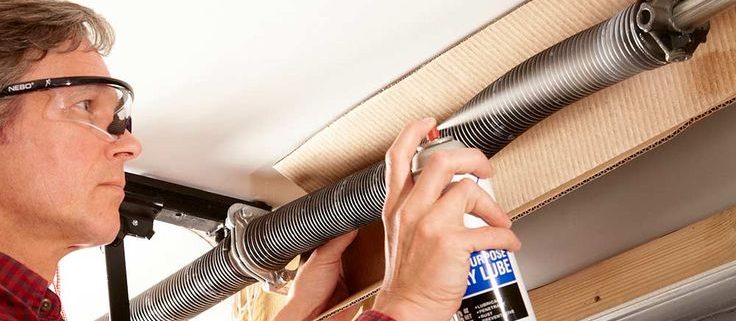
Tip: Lubricating springs with a silicone-based or lithium-based garage door spray every three to six months can extend their life and reduce noise. Do not use WD-40 as it can dry out the metal over time.
What NOT to Do When a Spring Breaks
Understanding what to avoid is just as important as knowing the signs.
- Do not attempt a DIY spring replacement. Garage door springs are under extreme tension, sometimes hundreds of pounds of force. Improper handling has caused serious injuries and fatalities. Spring replacement requires specialized tools and training.
- Do not use the door until it is repaired. Whether it seems to be working partially or not at all, a door with a broken spring is unstable and unsafe for vehicles and people.
- Do not assume the opener is the problem. Many homeowners call for opener repairs when the spring is actually the cause. A professional inspection will identify the real issue quickly.
- Do not ignore partial spring failure. A spring that is weakened but not fully broken will fail soon. Waiting increases the risk of sudden failure at an inconvenient or dangerous time.
How to Prevent Garage Door Spring Failure in Rockford, IL
Prevention is the best approach, especially in a climate like Rockford’s.
- Schedule a professional garage door inspection once a year, ideally in the fall before harsh winter weather
- Lubricate all moving parts including springs, rollers, and hinges every three to six months
- Check the door balance regularly using the manual lift test described above
- Replace springs proactively when they are approaching the end of their rated cycle life (most standard springs are rated for 10,000 cycles)
- Upgrade to high-cycle springs rated for 25,000 to 50,000 cycles for longer service life
When garage door repair is needed in the Rockford area, look for a licensed and insured garage door technician who provides warranties on parts and labor. Spring replacement typically falls into the affordable range of home repairs, especially when addressed before additional components are damaged.
Trusted Local Help Is Just a Call Away
Rockford Door Company serves homeowners across Rockford, IL with reliable, professional garage door service backed by real local experience. From broken spring replacements to full inspections, the work gets done right the first time. Do not wait for a small problem to become a costly one. Contact us today or give us a call to schedule a same-day inspection or spring replacement.